


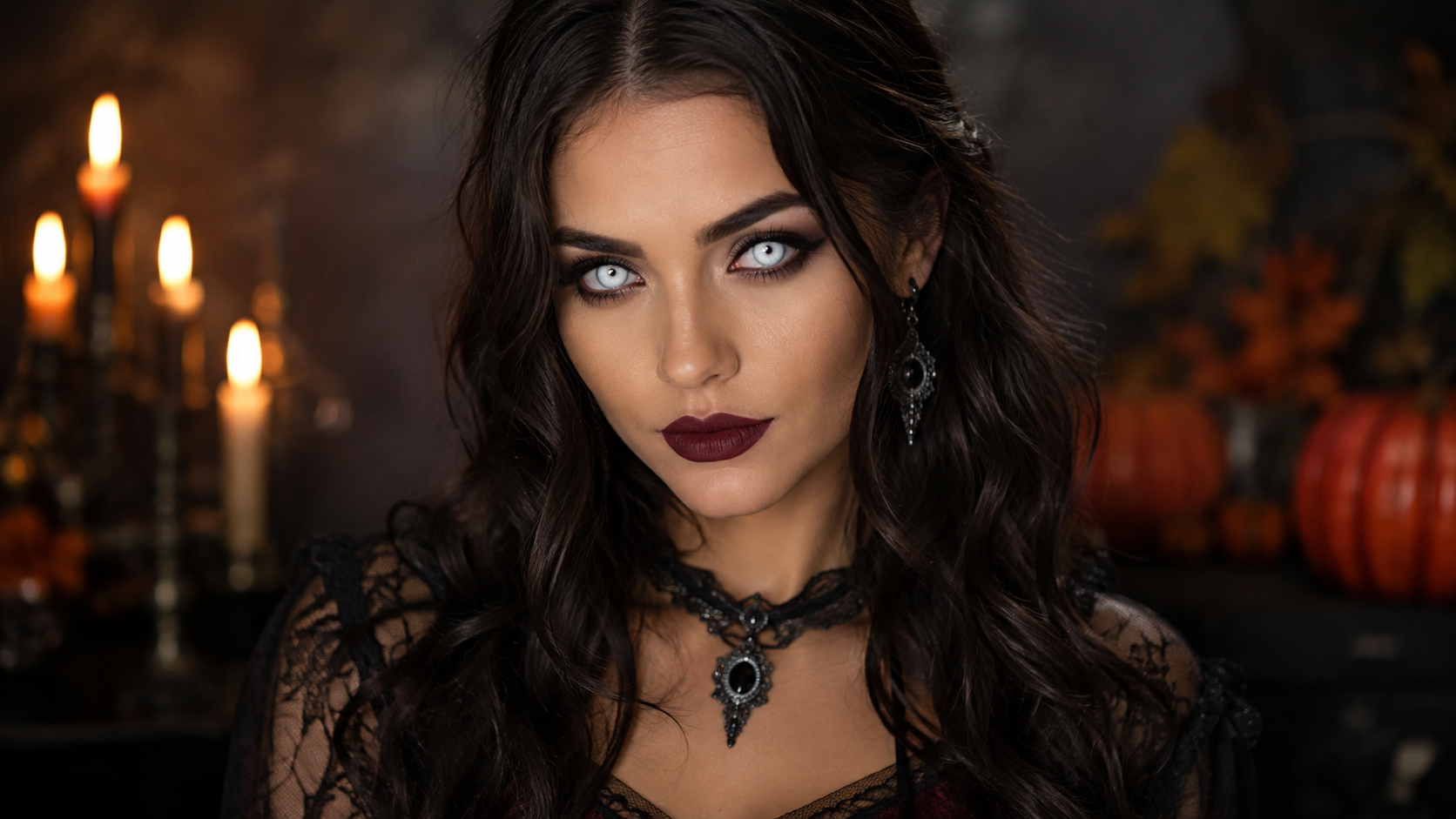
A convincing costume is often built from details that work together rather than one dramatic accessory, and halloween contact lenses can help create a supernatural or unsettling effect when they suit the character being portrayed. Someone aiming for a softer transformation may prefer coloured contact lenses that complement a wig, makeup palette or costume without becoming the main focus. For ghostly, fantasy or otherworldly characters, white contact lenses can create a much more noticeable change, particularly when paired with carefully planned makeup and lighting.
Build the Look Around a Clear Character
Costume planning tends to work best when there is a clear visual direction from the beginning. Rather than choosing individual accessories because they look interesting on their own, the wearer can think about what makes the character immediately recognisable.
For a vampire-inspired costume, for example, darker makeup, pale skin tones and deep red details might form the foundation of the look. A fantasy character may rely on metallic makeup, unusual hair colours and decorative accessories instead. Once those elements have been established, changing the appearance of the eyes can help reinforce the same theme.
The goal is not necessarily to make every part of the costume dramatic. If the makeup and clothing are already highly detailed, a simpler eye effect may create better balance. Conversely, a relatively straightforward outfit can sometimes benefit from one striking facial detail.
Use Colour to Support the Mood
Colour plays a major role in how a costume is interpreted.
Deep reds and dark tones can create an intense or threatening appearance, while pale blue, grey and icy shades may suit supernatural or fantasy characters. Softer shades can also be useful for characters who require a noticeable but believable change in appearance.
It helps to think about the entire colour palette rather than treating the eyes separately. A shade that looks appealing by itself may clash with a brightly coloured wig or heavily patterned costume.
Repeating small amounts of the same colour throughout a look can make the styling feel more intentional. Eye makeup, jewellery, hair accessories and clothing details can all be used to connect the overall palette.
Consider How the Eyes Will Appear in Photos
Many costumes are created with photographs in mind, especially for parties, conventions and themed events.
Camera lighting can change the way eye colours appear. A pale shade that looks dramatic in person may become even brighter under flash, while a darker shade may lose some of its detail in dim indoor conditions.
Close-up photographs also reveal details that may not be noticeable from several metres away. Makeup edges, lashes and the area surrounding the eyes therefore deserve as much attention as the colour itself.
A simple test before the event can be useful. Taking photographs in daylight, indoor light and flash photography allows the wearer to see how the full look changes between environments.
This is particularly helpful when the costume has been designed for an evening event but photographs may be taken earlier in the day.
Balance Eye Makeup With the Rest of the Face
Changing the appearance of the eyes can influence how surrounding makeup looks.
Very strong eye colours may need less elaborate eye shadow because the eyes already provide a natural focal point. Defined eyeliner and carefully applied lashes can often provide enough framing without making the area feel overcrowded.
More subtle eye effects may allow for stronger makeup techniques, including smoky shadow, graphic eyeliner or detailed fantasy designs.
The rest of the face should also remain part of the plan. Lip colour, contouring, face paint and even eyebrow styling can affect how convincing the final character appears.
A well-balanced costume usually has one or two main areas of emphasis rather than multiple details competing equally for attention.
Plan for the Length of the Event
Costume choices should also reflect how and where the outfit will be worn.
A quick photoshoot is very different from spending an entire day at a convention or attending a long evening event. People who expect to wear eye products for extended periods need to pay particular attention to comfort and proper handling.
Hands should always be thoroughly washed and dried before touching anything that will be placed on the eyes. Products should be stored, cleaned and replaced according to their supplied instructions.
Sharing between wearers should be avoided, even if the item is only being used temporarily as part of a costume.
Any persistent discomfort, redness, pain, watering or changes in vision should be taken seriously. The product should be removed rather than worn simply to preserve the appearance of the costume.
Anyone with an existing eye condition or uncertainty about suitability should seek guidance from a qualified eye care professional.
Test Everything Together Beforehand
Trying the complete costume before the event can save considerable frustration.
A design may look very different once the wig, makeup, clothing and accessories are all worn together. Something that seemed too dramatic by itself may suddenly make sense within the finished costume, while another detail may become unnecessary.
A trial also gives the wearer time to make small adjustments. Makeup colours can be changed, accessories repositioned and clothing altered before there is pressure to leave for an event.
Photographs taken during the test can be particularly useful because they show how the outfit will appear to other people rather than only in a mirror.
Make the Eyes Part of the Story
Strong costume styling is usually about creating a consistent character rather than adding as many dramatic elements as possible.
The eyes can help suggest that a character is supernatural, mysterious, dangerous or simply different from their everyday appearance. When the colour, makeup, lighting and clothing all support the same idea, even a relatively simple costume can feel much more complete.
Planning around the character, testing the look early and treating comfort as seriously as appearance can help create a result that works both visually and practically.